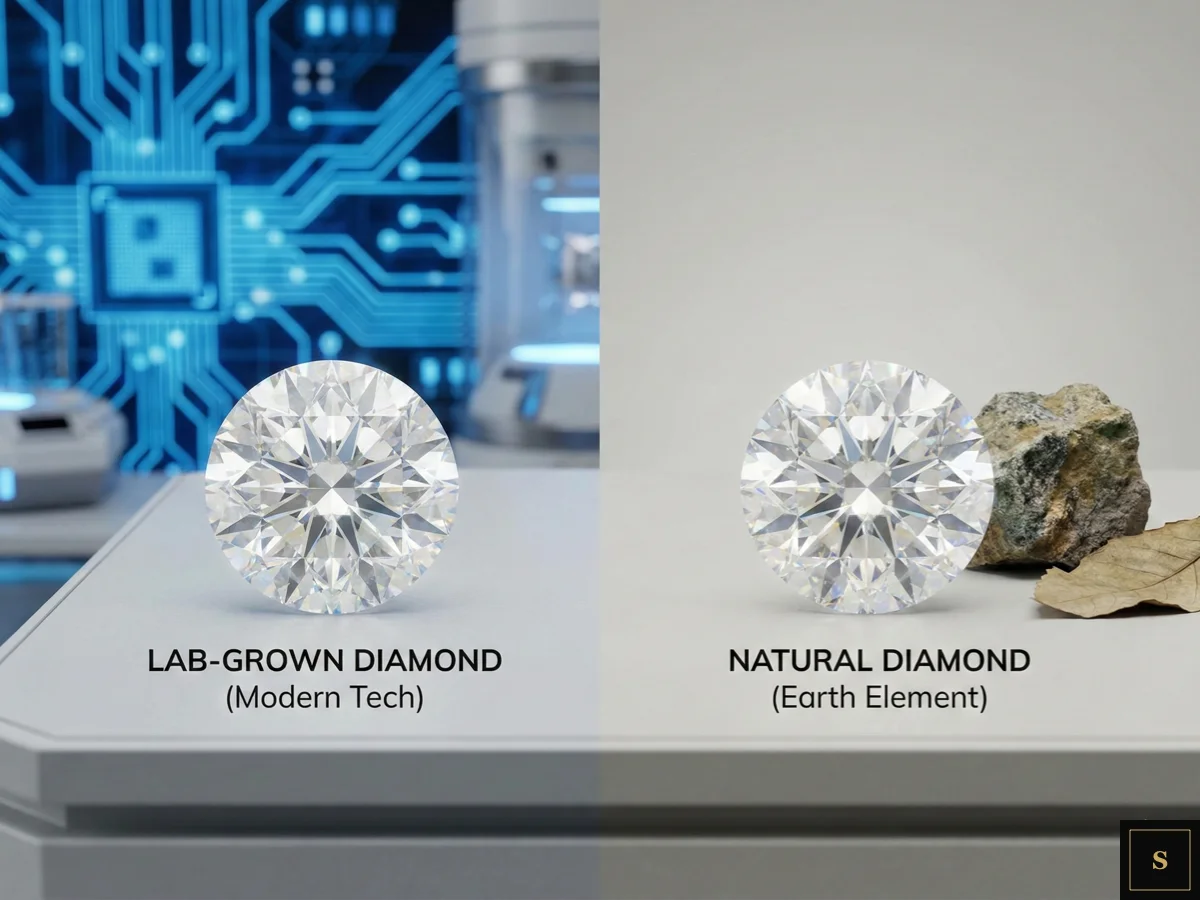
The diamond industry has been transformed by lab-grown diamonds, yet misconceptions persist. Let's examine the facts about how lab-grown diamonds compare to their mined counterparts.
Are Lab-Grown Diamonds "Real" Diamonds?
Yes, unequivocally. Lab-grown diamonds are chemically, physically, and optically identical to mined diamonds. They're composed of pure carbon arranged in a crystal structure — the definition of diamond. The FTC has ruled that lab-grown diamonds are, in fact, diamonds.
Even expert gemologists cannot distinguish between lab-grown and mined diamonds without specialized equipment. They have the same:
- Hardness (10 on Mohs scale)
- Refractive index
- Thermal conductivity
- Crystal structure
Quality Comparison
Lab-grown diamonds are graded using the same 4Cs as mined diamonds: Cut, Color, Clarity, and Carat. Top-quality lab-grown diamonds can achieve:
- D color (completely colorless)
- IF/VVS clarity (internally flawless)
- Ideal cut grades
In fact, because growth conditions can be precisely controlled, lab-grown diamonds often achieve higher average quality than mined stones.
Environmental Impact
Mining diamonds requires moving approximately 250 tons of earth per carat recovered. Lab-grown diamonds eliminate:
- Habitat destruction
- Water pollution
- Ecosystem disruption
- Community displacement
Ethical Considerations
Lab-grown diamonds are inherently conflict-free. There's no supply chain to monitor, no risk of supporting harmful practices. For ethically conscious consumers, this peace of mind is invaluable.
Value Proposition
Lab-grown diamonds typically cost 60-80% less than comparable mined stones. This isn't because they're inferior — it's because production doesn't require billion-year geological processes or destructive mining operations.
The Future Is Grown
As technology improves and awareness grows, lab-grown diamonds continue gaining market share. They represent a more sustainable, ethical, and accessible path to diamond ownership without sacrificing quality or beauty.