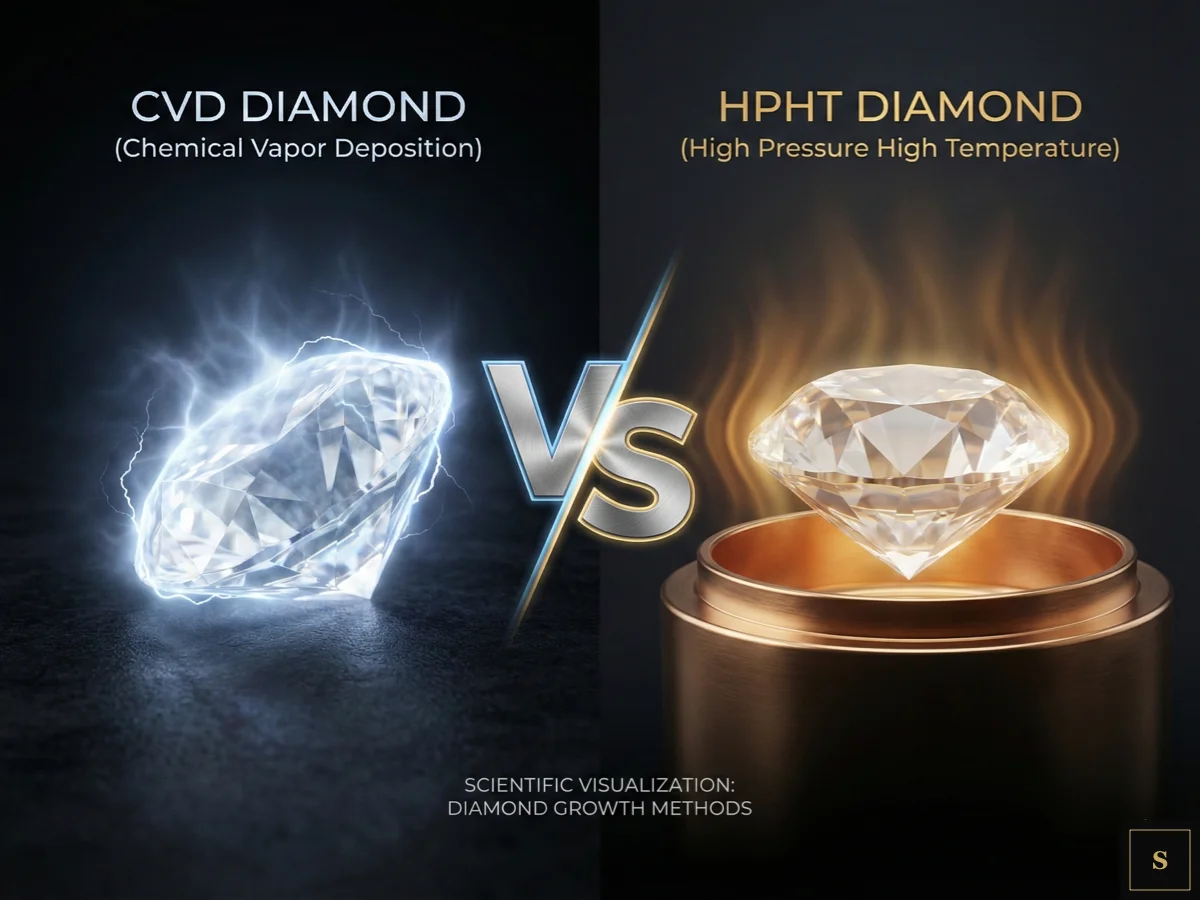
When shopping for lab-grown diamonds, you'll encounter two main production methods: CVD (Chemical Vapor Deposition) and HPHT (High Pressure High Temperature). Understanding these processes helps you make an informed decision about your diamond purchase.
What is CVD Diamond Growth?
Chemical Vapor Deposition grows diamonds in a vacuum chamber filled with carbon-rich gases. A diamond seed is heated to around 800°C, and carbon atoms from the gas gradually deposit onto the seed, building the crystal layer by layer.
CVD Advantages:
- Produces exceptionally pure crystals
- Better control over growth conditions
- Ideal for creating large, flat plates suitable for ring carving
- Generally results in Type IIa diamonds (purest type)
What is HPHT Diamond Growth?
High Pressure High Temperature mimics natural diamond formation conditions. Carbon is subjected to pressures of 5-6 GPa and temperatures of 1,300-1,600°C, replicating conditions found 150km below Earth's surface.
HPHT Advantages:
- Produces diamonds with unique internal character
- Often results in warmer, more organic appearance
- Well-established process with decades of refinement
- Can create distinctive crystal structures
Which Is Better for Single-Crystal Rings?
Both methods can produce excellent diamonds for ring creation. CVD tends to offer:
- Lower internal stress (important for ring carving)
- Higher color grades more consistently
- Better suited for very large crystals
HPHT offers:
- Unique character and warmth
- Distinctive optical properties
- Different collector appeal
Making Your Choice
The "better" method depends on your priorities. For maximum purity and colorlessness, CVD often excels. For unique character and warmth, HPHT has distinct appeal. Both create genuine diamonds that are chemically, physically, and optically identical to mined stones.