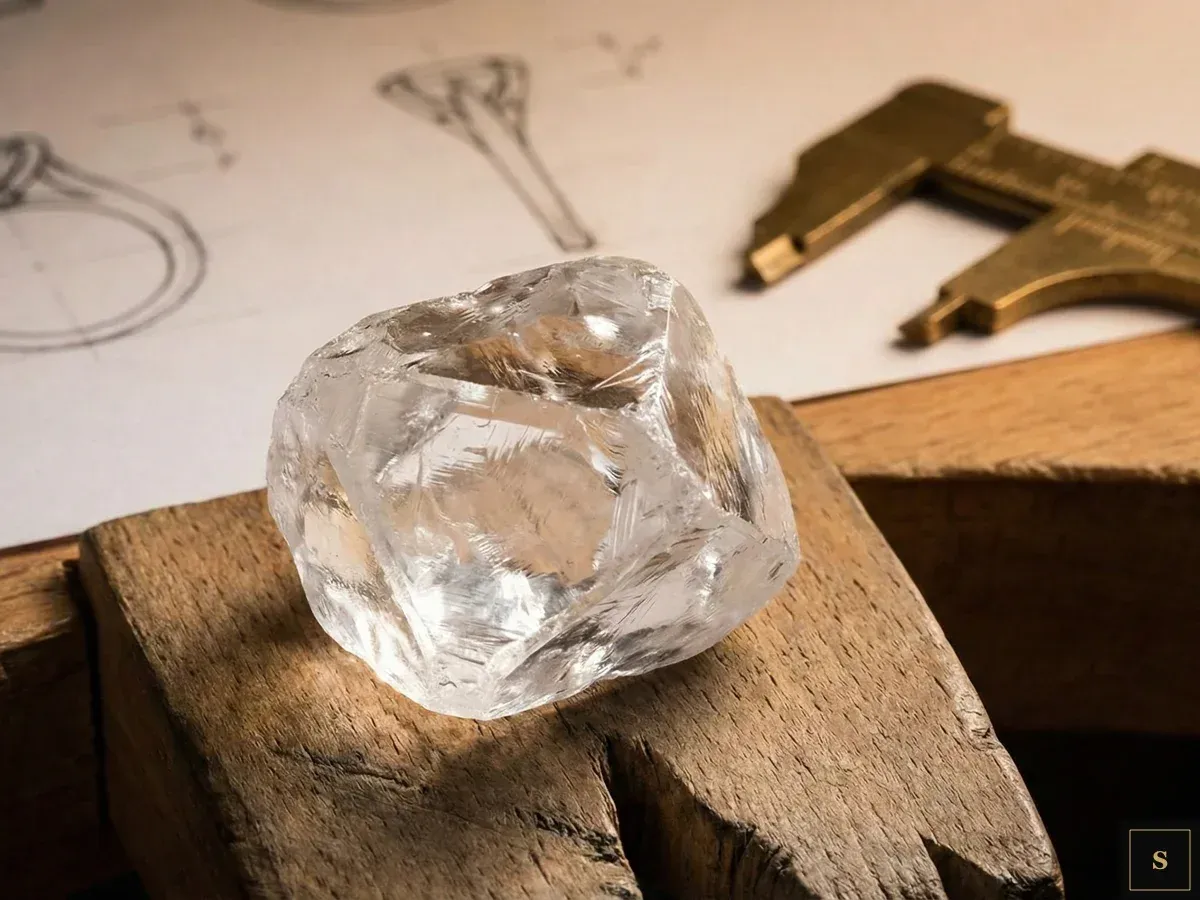
Diamond faceting is where science meets art. Each angle, each surface, each intersection is calculated to maximize the stone's interaction with light. In single-crystal diamond rings, this art reaches its highest expression.
Understanding Light Behavior in Diamonds
When light enters a diamond, three things happen:
- Brilliance: White light reflected back to the viewer
- Fire: Light dispersed into spectral colors
- Scintillation: Sparkle as the diamond moves
The faceter's job is to optimize all three through precise angle calculations and flawless execution.
The Anatomy of a Faceted Diamond
A traditional round brilliant cut has 57-58 facets:
- Crown: The top portion with the table (flat top) and surrounding facets
- Girdle: The edge where crown meets pavilion
- Pavilion: The bottom portion that reflects light back up
- Culet: The small point at the bottom
Single-Crystal Ring Faceting
Faceting a single-crystal ring presents unique challenges. Unlike a traditional stone, light enters from multiple directions — through the band, through the top, from all angles. Our rings feature up to 133 facets, each calculated for optimal light performance.
Tools of the Trade
Diamond faceting requires specialized equipment:
- Faceting machine: Precision device for holding and positioning the diamond
- Scaif: Rotating cast-iron disk embedded with diamond dust
- Dop: Holder that grips the diamond during cutting
- Loupe: Magnification for inspecting progress
The Human Element
Despite advanced technology, diamond faceting remains intensely human. No machine can replicate the intuition developed over decades of practice. A master faceter doesn't just cut — they feel when the angle is right, sense when the pressure needs adjustment.
Precision Standards
Professional faceting requires accuracy within:
- 0.5 degrees for angles
- 1% for proportions
- Perfect symmetry across all corresponding facets
This precision, maintained across hundreds of hours of work, is what separates extraordinary diamonds from ordinary ones.